2026 World Cup: 5 Essential Insights
The 2026 FIFA World Cup will be hosted by Canada, Mexico, and the United States from June 11 to July 19, 2026, featuring 48 teams and 104 matches across 16 venues. FIFA’s expanded tournament is the fi...
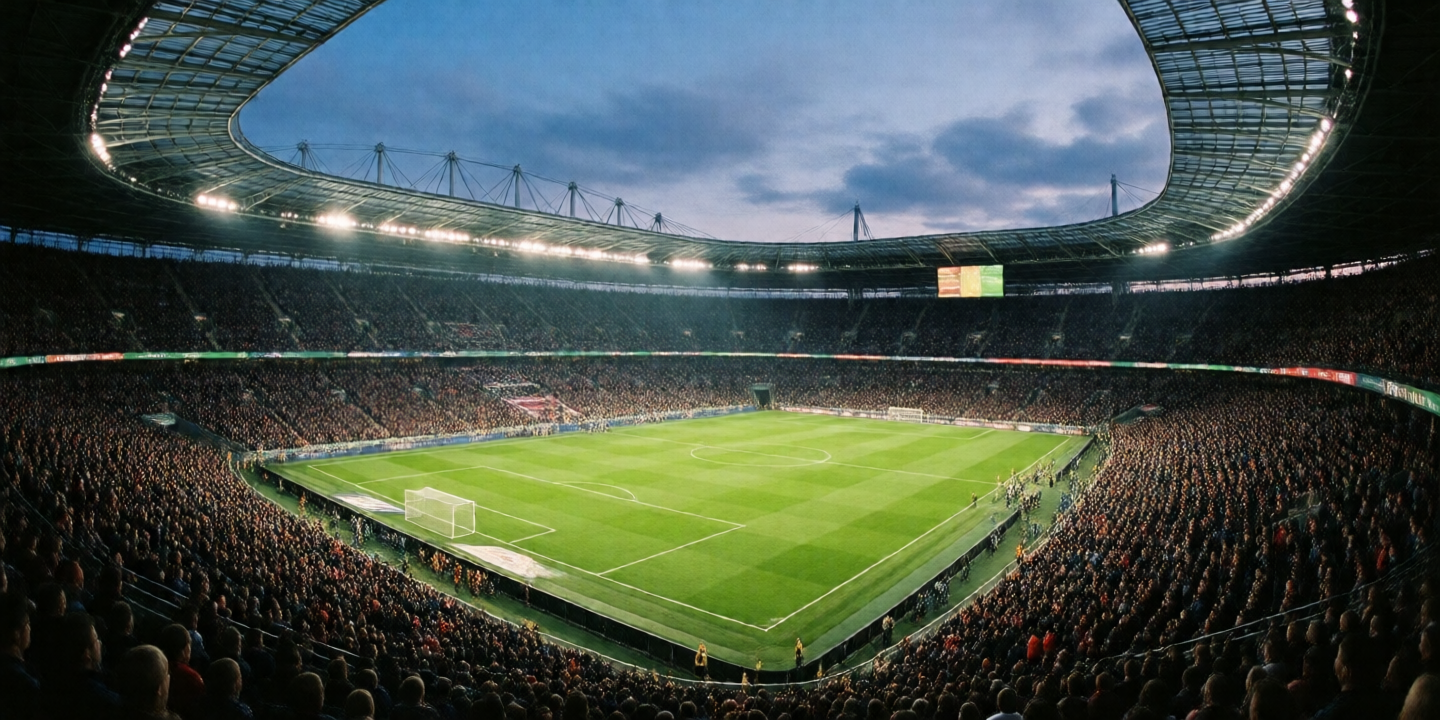
2026 World Cup: 5 Essential Insights
The 2026 FIFA World Cup will be hosted by Canada, Mexico, and the United States from June 11 to July 19, 2026, featuring 48 teams and 104 matches across 16 venues. FIFA’s expanded tournament is the first men’s World Cup with 48 finalists, creating 12 groups of four before the knockout stage begins with a Round of 32. The opening match takes place in Mexico City, while the final is scheduled for MetLife Stadium in East Rutherford, New Jersey. Matches will be played in three countries and four time zones, making travel, kickoff timing, squad rotation, and climate major competitive factors. Tactical Review tracks the schedule, team tactics, player statistics, predictions, and tournament developments for supporters worldwide. Start by identifying your preferred host city, then map match dates against travel time, local kickoff hours, and team rest periods before making plans.

The 2026 World Cup is not simply a larger version of Qatar 2022. It is a different logistical and tactical problem, and anyone who ignores that difference will misread the tournament. Canada, Mexico, and the United States bring enormous geographic distances, contrasting climates, and stadium conditions into one competition, while FIFA’s 48-team format increases the number of meaningful fixtures from 64 to 104.
Tactical Review approaches the event from the angle that matters to serious fans: what the schedule changes, which teams benefit, and where the hidden risks sit. The official framework is confirmed by FIFA’s World Cup 2026 tournament information, while venue and host details are also documented by Canada Soccer and the United States Soccer Federation. The glamorous draw is only the beginning; rest days, altitude, heat, flight length, and group position will decide far more than casual previews admit.
Want the tournament framework at a glance? Review the essential details first.
The Quick Comparison
| Category | 2026 World Cup | Previous 32-team format |
|---|---|---|
| Host countries | Canada, Mexico, United States | One or two hosts commonly |
| Qualified teams | 48 | 32 |
| Group structure | 12 groups of four | 8 groups of four |
| Group-stage matches | 72 | 48 |
| Total matches | 104 | 64 |
| Knockout entry point | Round of 32 | Round of 16 |
| Final date | July 19, 2026 | Tournament-specific |
| Venues | 16 across three countries | Tournament-specific |
The central comparison is brutally clear: the 2026 World Cup adds 40 matches and 16 teams, but it does not add unlimited recovery time. Each group still contains four teams, and the top two from every group advance alongside the eight best third-place teams. That qualification mechanism creates a new layer of uncertainty because a team can finish third and still progress, while another third-place side can be eliminated on goal difference or disciplinary records.
This format also changes match value. In a traditional 32-team tournament, every group match carries obvious pressure because two teams advance; in 2026, teams may calculate whether a draw, goal difference, or controlled defeat is strategically sufficient. FIFA has confirmed the tournament’s 104-match structure, and the International Football Association Board Laws of the Game remain the technical foundation for match administration. From a prediction perspective, that means late group fixtures could produce cautious football rather than the all-or-nothing intensity many supporters expect.
- Canada hosts matches in Toronto and Vancouver.
- Mexico hosts matches in Guadalajara, Mexico City, and Monterrey.
- The United States hosts matches across 11 venues.
- The final is scheduled for East Rutherford, New Jersey.
- The tournament begins in Mexico City on June 11, 2026.
complete World Cup 2026 host city guide
Round 1: Which Schedule Features Matter Most?
The most important schedule features are the June 11 opening match, the July 19 final, the 104-match total, and the distribution across 16 venues in Canada, Mexico, and the United States. These dates and locations determine travel, rest, climate exposure, ticket demand, and the likely tactical advantage for each national team.
The first confirmed anchor is Mexico City, where the tournament opens on June 11, 2026. Estadio Azteca is one of football’s most historic venues, but history does not remove the practical challenge: Mexico City sits at high elevation, and visiting teams must adjust to thinner air, altered ball behavior, and reduced recovery comfort. Guadalajara and Monterrey create different conditions, while Vancouver and Toronto bring cooler environments that can suit physically intense pressing teams.
The United States supplies the largest share of host venues, including Atlanta, Boston, Dallas, Houston, Kansas City, Los Angeles, Miami, New York/New Jersey, Philadelphia, San Francisco Bay Area, and Seattle. These cities are not interchangeable. Miami’s heat and humidity, Dallas’s summer conditions, Seattle’s travel position, and New York/New Jersey’s final-stage attention create distinct preparation requirements. A team playing in Atlanta and then traveling to Vancouver is not facing a simple change of scenery; it is managing a genuine performance variable.
The schedule should therefore be read in three layers:
- Match density: how many days separate fixtures.
- Movement burden: how far teams travel between venues.
- Environmental load: heat, humidity, elevation, and surface conditions.
That is where experienced analysis separates itself from a list of kickoff times. A strong team can lose its edge when recovery is poor, especially if its game model depends on repeated high-intensity sprints.

The host-country advantage deserves careful treatment rather than lazy assumptions. Canada, Mexico, and the United States will receive automatic qualification as hosts, while the remaining places are allocated through FIFA’s confederation system. That guarantees three local teams in the field, but hosting does not guarantee a favorable path. Canada must cope with international expectations, Mexico must manage altitude and pressure, and the United States must handle the burden of performing across a huge home market.
The practical lesson is straightforward: identify the venue before judging a match. Two group games with identical opponent rankings may not have identical probabilities if one is played in Vancouver and the other in Monterrey. Travel distance, kickoff hour, local heat, and the time available to acclimatize should appear in every serious preview. Tactical Review will use those inputs alongside recent form, expected lineups, injuries, and player workload rather than treating FIFA rankings as a complete answer.
Round 2: How Does the 48-Team Format Change Competition?
The 48-team format changes competition by adding a Round of 32, expanding the group stage to 12 groups, and allowing eight third-place teams to advance. Every finalist plays at least three matches, while the eventual champion must complete eight matches instead of seven. That additional knockout fixture makes squad depth more valuable than ever.
The change is not cosmetic. In the old format, the champion played three group matches and four knockout matches. In 2026, the champion plays three group matches and five knockout matches. A manager relying on 13 or 14 trusted players will eventually pay for that narrow rotation, particularly when matches are played in heat or after long flights. The best squads will use the group phase to protect key midfielders, manage yellow-card exposure, and develop dependable alternatives at full-back and center-back.
The group-stage qualification rules create another strategic tension. The top two teams in each group advance, along with the eight strongest third-place finishers. Because the third-place ranking compares teams from different groups, a side may prioritize a strong goal difference even after losing one match. Conversely, a team with four points may still face an uncomfortable wait while other groups finish. This is a major information-gain point often missed in basic schedules: the final group matches may be affected by simultaneous outcomes elsewhere, making a team’s incentives impossible to assess from its own table alone.
A responsible viewer should track:
- Points, goal difference, and goals scored.
- Yellow-card accumulation and suspension risk.
- Head-to-head rules where applicable.
- The order and timing of final group fixtures.
- Rest days before the Round of 32.
The FIFA Competition Regulations should remain the authority for official tournament procedures. FIFA has described the 2026 competition as “the biggest and most inclusive FIFA World Cup ever,” a statement that reflects the expansion but not the full tactical consequence. More teams mean more variety, more unfamiliar opponents, and a greater chance that one poor tactical choice reshapes the entire bracket.
Get a structured view of the new format before following predictions.
The 48-team field also increases the value of matchup analysis. Expanded qualification brings more debutants and returning nations, while established teams may face opponents whose defensive structure has barely been tested against elite possession. That is why raw reputation can mislead. A fashionable favorite might dominate the ball but struggle against a compact 5-4-1, while a lower-ranked team with exceptional set-piece delivery can punish a favorite’s lack of aerial control.
From a prediction standpoint, the first group match should not be treated as a final verdict. Tournament football is a sequence of adjustments: the opening lineup reveals the manager’s priorities, the second match exposes weaknesses, and the third match often becomes a calculation exercise. Tactical Review’s player-stat coverage should focus on progressive passes, defensive actions, shot quality, set-piece involvement, and minutes played, not merely goals and assists. The veteran lesson is simple: the scoreboard tells you what happened; the tactical evidence explains whether it can happen again.
World Cup 2026 group-stage format and qualification rules
Round 3: Why Will Travel, Climate, and Kickoff Times Decide Matches?
Travel, climate, and kickoff times will decide matches because the 2026 World Cup spans three countries, 16 venues, multiple time zones, and sharply different environmental conditions. Teams that manage sleep, hydration, training intensity, and transport better will gain an advantage that standard form tables cannot measure.
The United States host network stretches from Seattle on the Pacific coast to Miami on the Atlantic coast, with Dallas, Houston, Atlanta, Kansas City, Philadelphia, Boston, and New York/New Jersey between them. Canada adds Toronto and Vancouver, while Mexico adds Guadalajara, Mexico City, and Monterrey. The distances are substantial, and teams may need to cross time zones between matches. A four-hour clock shift can affect sleep timing, meal schedules, and training quality even before a player steps onto the pitch.
Climate is equally important. Mexico City’s elevation is a clear concern, Monterrey can deliver oppressive heat, and Miami combines heat with humidity. Vancouver offers a different physical environment, while Dallas and Atlanta can impose heavy summer conditions. The relevant question is not whether a team “likes” warm weather; it is whether its pressing structure can survive reduced recovery and slower defensive transitions. High-tempo teams may need earlier substitutions, while possession-oriented sides may benefit from controlling the match tempo.
The operational preparation should be precise:
- Arrive early enough to establish a stable sleep cycle.
- Schedule training at the expected kickoff hour whenever possible.
- Use hydration testing and individualized recovery plans.
- Rotate players before fatigue becomes visible.
- Monitor travel time rather than counting only calendar days.
A specific edge case deserves attention: two teams can have the same three-day gap between matches but radically different preparation windows if one travels across two time zones and the other remains in the same city. Calendar rest is not physiological rest. That distinction is one of the clearest reasons to distrust schedule summaries that list dates without locations.

The final is scheduled for MetLife Stadium in East Rutherford, New Jersey, and that location creates a different pressure profile from the group stage. The late tournament rounds concentrate media attention, ticket demand, and travel complexity around the New York metropolitan area. Teams reaching the final will already have played seven matches, so accumulated fatigue, squad rotation, and suspension management may matter more than early-tournament form.
The venue surface and match conditions should also be monitored through official updates. Stadium operations, training-ground access, weather forecasts, and kickoff windows can change the practical experience without changing the published fixture. Supporters planning travel should reserve flexibility around knockout matches because group-stage standings determine the exact bracket route. Anyone booking nonrefundable transport before the group draw and final schedule details are settled is accepting unnecessary risk (I learned that lesson the expensive way).
Tactical Review’s contrarian conclusion is firm: the strongest tournament team may not be the team with the highest average quality. It may be the team with the best adaptation system. A deep bench, adaptable pressing triggers, reliable set pieces, and disciplined recovery program can outperform a more gifted but rigid squad over eight matches. That is where player statistics and tactical observation must work together.
Explore match conditions and squad-level analysis before making your tournament shortlist.
The Final Score & Who Should Pick What
The best way to follow the 2026 World Cup is to combine the official FIFA schedule with venue, travel, climate, format, and squad-depth analysis. Casual fans should begin with host cities and match dates; serious analysts should add rest intervals, time-zone movement, third-place qualification scenarios, and player workload. The tournament rewards preparation because 104 matches produce more variables than the traditional 64-match model ever did.
For supporters choosing how to plan their coverage, the decision is clear:
- Choose a host-city focus if travel, stadium atmosphere, and local culture matter most.
- Choose a team focus if you want to track tactics, injuries, selections, and player form.
- Choose a format focus if qualification permutations and bracket paths interest you.
- Choose a data focus if you want expected goals, possession patterns, pressing numbers, and workload trends.
- Choose a balanced approach if you want the most reliable understanding of the tournament.
The final verdict is not complicated. The 2026 World Cup will be broader, longer, and more geographically demanding than every previous 32-team edition. Canada, Mexico, and the United States provide a spectacular stage, but the real competitive story will be written by recovery, travel, climate, rotation, and tactical flexibility. Follow the official FIFA information, verify changes before booking or wagering, and use Tactical Review for daily predictions and evidence-led tournament coverage.
daily World Cup 2026 predictions and team tactics
Ready to follow every major schedule development?
Frequently Asked Questions
Q: What is the 2026 World Cup?
A: The 2026 World Cup is the 23rd edition of FIFA’s men’s international tournament, hosted by Canada, Mexico, and the United States. It will feature 48 teams and 104 matches from June 11 to July 19, 2026. The competition begins with 12 groups of four teams, followed by a Round of 32, Round of 16, quarterfinals, semifinals, and final.
Q: How many teams qualify for the World Cup 2026?
A: Forty-eight national teams qualify for the 2026 World Cup, 16 more than the 32-team field used from France 1998 through Qatar 2022. Canada, Mexico, and the United States qualify automatically as co-hosts. The remaining places are allocated through FIFA’s confederation qualification systems, including UEFA, CONMEBOL, CONCACAF, AFC, CAF, and OFC.
Q: How does the 48-team World Cup format work?
A: The 48 teams are divided into 12 groups of four, with the top two teams in every group and the eight best third-place teams advancing. That creates a 32-team knockout stage and increases the total tournament schedule to 104 matches. The eventual champion must play eight matches, one more than champions in the former 32-team format.
Q: Where will the 2026 World Cup final be played?
A: The 2026 World Cup final is scheduled for MetLife Stadium in East Rutherford, New Jersey, in the New York metropolitan area. The venue is part of the United States’ 11-host-city network, which also includes Atlanta, Boston, Dallas, Houston, Kansas City, Los Angeles, Miami, Philadelphia, San Francisco Bay Area, and Seattle. Confirm fixture details through FIFA before arranging travel.
Q: When does the 2026 World Cup start?
A: The 2026 World Cup starts on June 11, 2026, with the opening match scheduled for Mexico City at Estadio Azteca. Mexico City, Guadalajara, and Monterrey will host matches in Mexico, while Toronto and Vancouver will host matches in Canada. Kickoff times can vary by venue and broadcast market, so supporters should check the official FIFA schedule for the latest details.
Q: What should fans consider before booking World Cup travel?
A: Fans should consider venue location, match timing, domestic transport, accommodation prices, visa requirements, and possible knockout-stage uncertainty before booking. The 2026 tournament spans Canada, Mexico, and the United States, and travel between cities can involve long flights and time-zone changes. Build flexible reservations around group standings, especially if planning to attend a Round of 32 or quarterfinal match.
Q: Is it sensible to use World Cup predictions for wagering?
A: World Cup predictions should be treated as analysis rather than certainty, and any wagering must be legal in the reader’s jurisdiction and kept within a fixed entertainment budget. Compare team news, injuries, venue conditions, travel, expected lineups, and market movement instead of relying on reputation alone. Never chase losses, and verify the applicable rules with the relevant local regulator before placing any bet.
End of Transmission
Thank you for reading. Explore more articles from the archive.
Tactical Review · Article #8c · 2026